
Paradigm shift: From damage assessment to integrity assessment
A new standard for the assessment of works of art
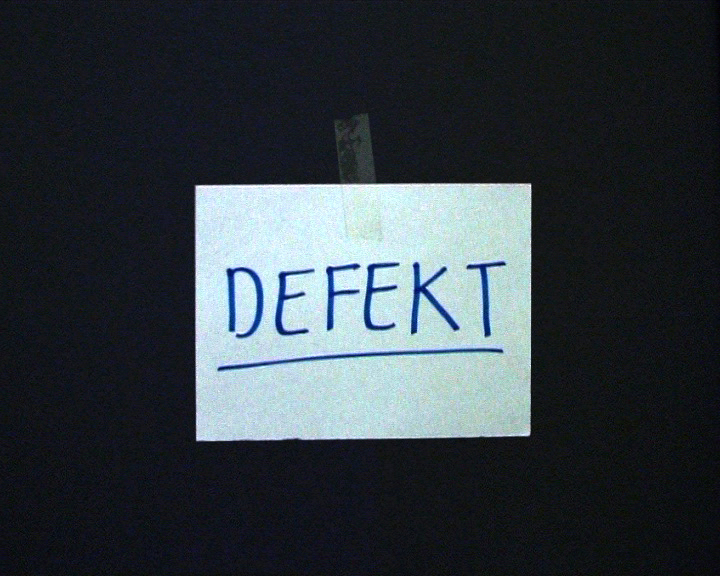
“It seems as if a notice is stuck to a monitor, attached with a piece of adhesive tape. The note reads: DEFEKT (out of order). But the notice, the tape and the filmed screen are nothing more than the video work itself.”, b+p collection.
The condition of works of art has always been defined – particularly in the context of insurance claims and restoration measures – through the concept of damage. The starting point of every assessment was the question of the injury: what has been lost? What interventions were necessary? What depreciation in value results from this?
This perspective is deeply embedded in professional practice. And it has its justification. Yet it is limited in its methodological design.
For the assessment of damage is not an objective quantity. It is always also the result of an individual, experience-based judgement – of the expert, the conservator, the connoisseur. Two specialists can weight the same findings differently, with correspondingly divergent outcomes for the description of condition and the determination of value loss. A more fundamental problem compounds this: the classical damage assessment focuses almost exclusively on the material level. It examines losses of substance, reworkings, retouching and structural alterations. In doing so, it reduces the work of art to its physical appearance.
A Work of Art Is More Than Material
A work of art is a bearer of meaning. It communicates artistic intention, is embedded in historical contexts and unfolds its effect in the perception of the viewer. These immaterial dimensions are constitutive for the quality and value of a work – yet they are only inadequately captured by a purely damage-oriented assessment.
Here lies the starting point for a necessary change of perspective: away from exclusive orientation towards damage, towards an assessment of the integrity of a work of art.
What Integrity Means
In common usage, the concept of integrity is associated with wholeness and intactness. Applied to works of art, however, it describes not an absolute condition but a relative relationship. What is decisive is not the mere absence of damage, but the interplay of all the individual properties of a work in comparison with an ideal reference condition – the fictive, optimally preserved, museally maintained work of equivalent type and quality. In the methodology of expert assessment, work integrity is understood as the relationship between material substance and immaterial content. What is assessed is not an isolated condition, but the interplay of material, formal design, historical meaning, context and perception. This approach leads to a fundamental differentiation between two levels.
Material integrity
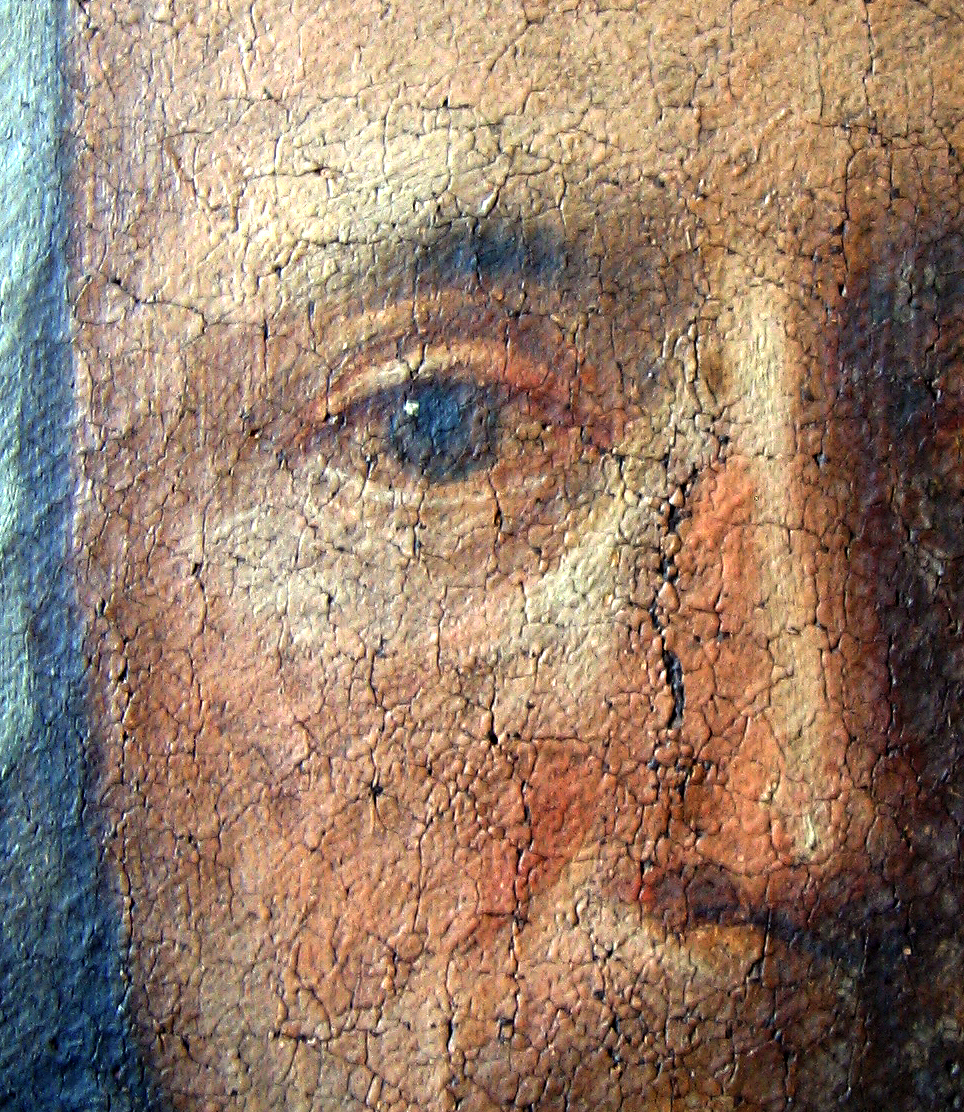
The material criteria of integrity encompass the physical substance and its state of preservation: the original substance, the technical execution and its alterations, the formal structure, and historical traces of ageing and use. What is decisive here is not merely whether changes are present, but how they are to be evaluated. Losses of substance have a fundamentally negative effect. Intrinsic traces of ageing, by contrast – patina, craquelure, age-appropriate oxidation – can in fact strengthen the sense of authenticity of a work. They are part of its historical reality, not a deviation from it.
Immaterial integrity
The immaterial criteria capture the level of meaning of the work: artistic intention, thematic content, historical and cultural context, and the perception of the work as a coherent whole.
A work may, despite material interventions, possess a high degree of immaterial integrity, if its meaning, function and reception have remained largely unchanged. Conversely, a materially largely intact work may be compromised in its immaterial integrity – for example, if its original context has been lost or its meaning has been rendered unrecognisable through overlaying interventions.
Only through the systematic separation and simultaneous integration of these two levels does a differentiated assessment become possible. Comparison with a museally maintained reference work establishes an objectified standard that goes beyond individual judgement.
Integrity as a Dynamic Structure
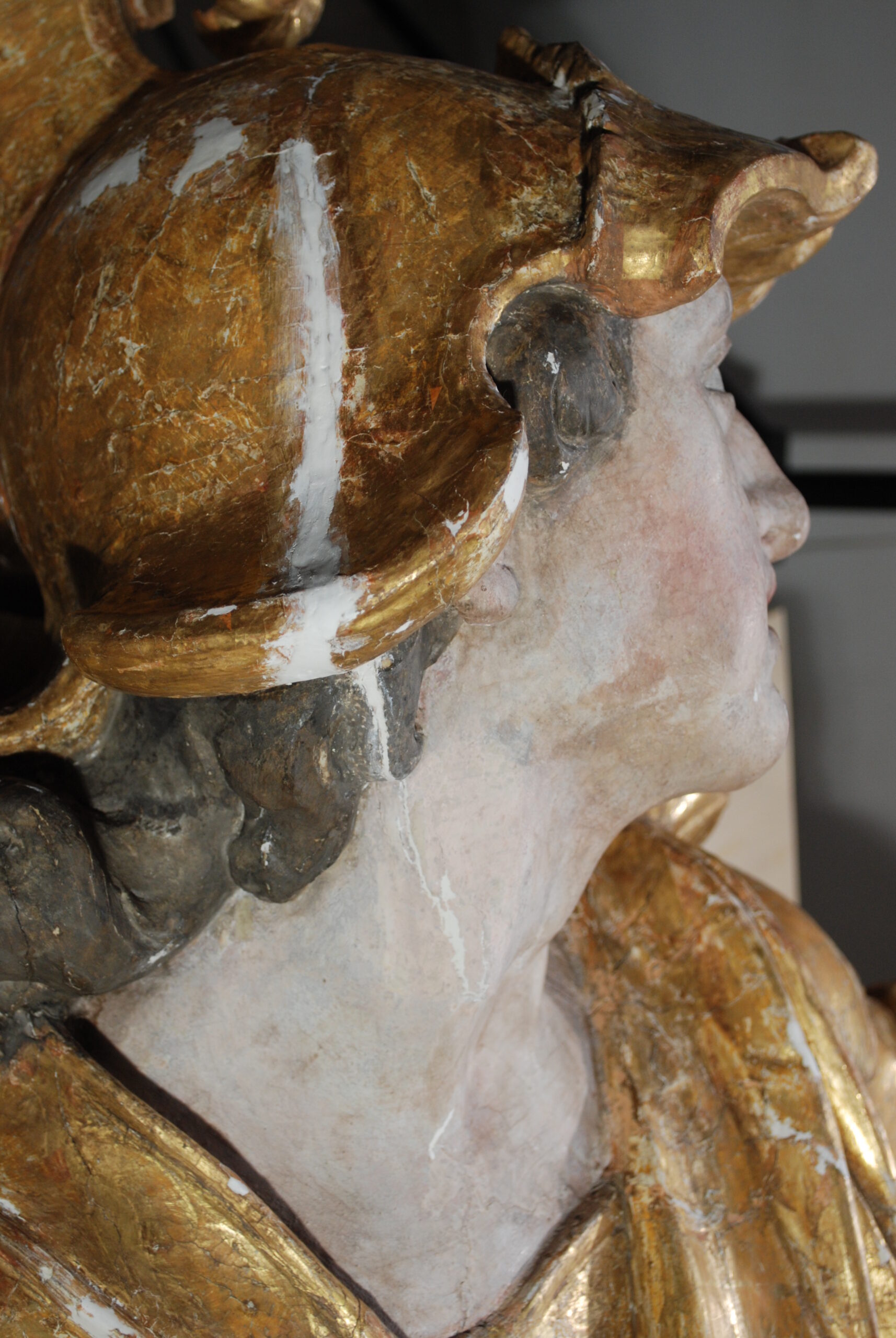
In the classical insurance model, the damage is the low point. A restoration can improve the condition, yet – so the assumption goes – never again reaches the level of an undamaged work. The depreciation in value remains permanently in place.
Consideration through the lens of integrity leads to a more differentiated assessment. A professionally executed restoration can not only remedy damage, but substantially improve the legibility, stability and perception of a work. In such cases, the integrity – particularly on the immaterial level – can reach a level approximately comparable to that of an undamaged reference work.
The crucial question, therefore, is no longer, “How badly is a work of art damaged?” It is, “How much of it remains compared to a work in optimal condition?”
Integrity is not a static condition. It is a dynamic structure that encompasses loss and restoration in equal measure.
The crucial question, therefore, is no longer, “How badly is a work of art damaged?” It is, “How much of it remains compared to a work in optimal condition?”
The Consequence
This change of perspective has far-reaching consequences – particularly in the insurance sector. The assessment becomes more comprehensible, because it is based on defined criteria and a clear reference standard. The dependence on subjective individual judgements decreases. Depreciations in value are no longer derived primarily from the damage, but from the degree of integrity loss.
This gives rise to a system that does justice to the complexity of works of art. It takes into account not only material changes, but also the immaterial qualities that constitute the actual value of a work.
The step from the damage report to the integrity assessment is not an optional approach. It is imo a professional necessity.
Dr. Martin Pracher, March 2026
Related artikels

