
The Integrity of a Work of Art
Concept, Dimensions, and Significance for the Individual Work of Art
What does integrity mean in a work of art?
When a painting has been extensively overpainted, when a sculpture has lost its original polychromy, when an altarpiece panel has been removed from its ensemble and presented in isolation — one sometimes says that the work has lost its integrity. What exactly does this mean?
Integrity denotes the unity of a work of art in its totality: the coherent relationship between its material substance, its formal design, its conceptual content, and the context in which it is perceived. A work possesses integrity when these dimensions interact and enable a coherent experience — when what one sees corresponds to what the work is and was in its historical and artistic reality.
Integrity is not an absolute state, but a relative condition. It does not describe whether a work is “well preserved” in a purely technical sense, but whether it remains experienceable as a meaningful, interconnected whole.
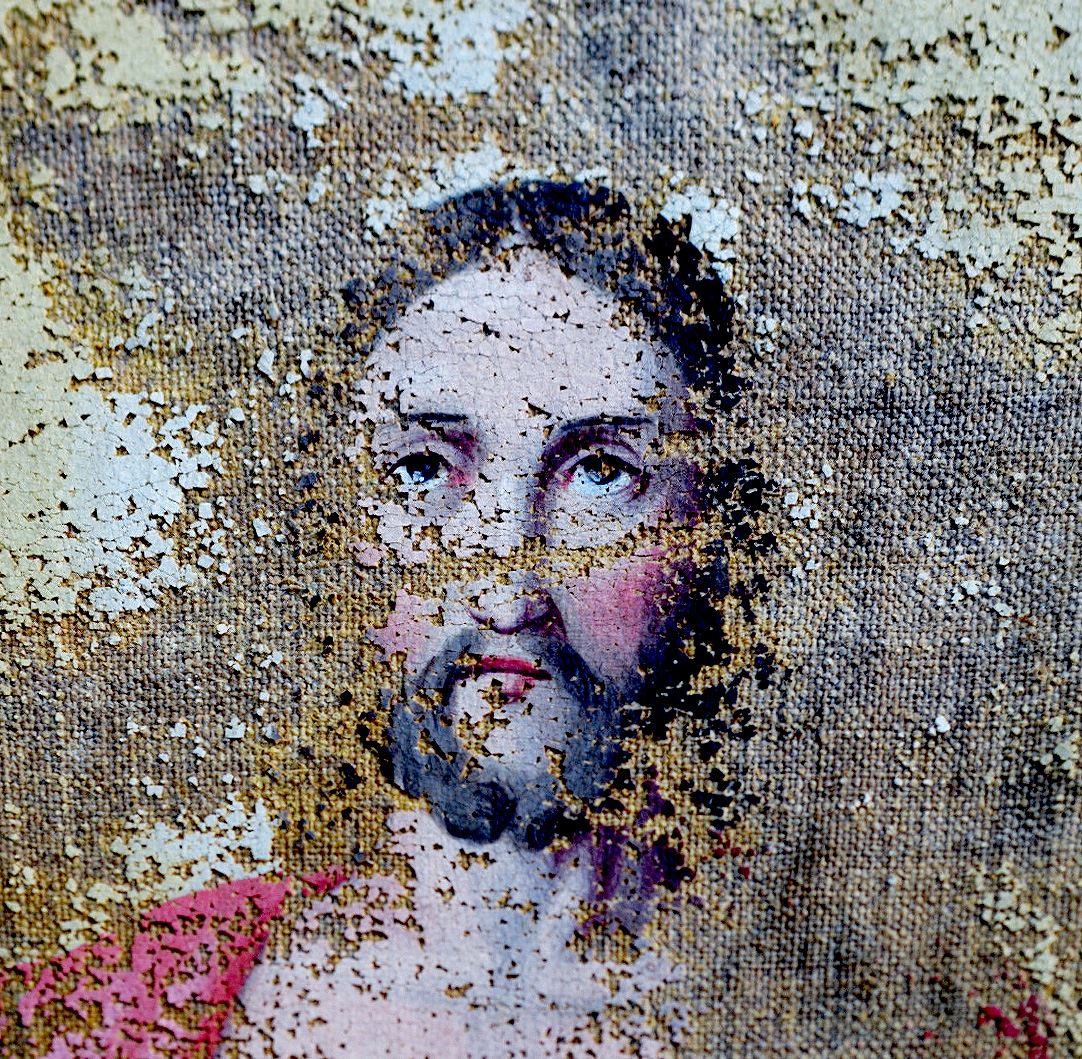
Unknown painter, “Salvator Mundi,” 19th century, oil on canvas. Is the integrity of the authentic painting in terms of completeness/wholeness, intactness, and long-term preservation still verifiable?
Integrity and Authenticity — Two Different Questions
Both concepts concern the identity of a work of art, but they answer fundamentally different questions.
Authenticity asks about authorship: Does the work actually originate from the named artist? Is the attribution secure? It is a question of genuineness in the sense of provenance.
Integrity asks about preserved identity: Is the work still what it is by its very nature? This question presupposes authenticity but goes far beyond it. A work may be entirely authentic — and yet deeply compromised in its integrity, if, for instance, far-reaching restorations, overpaintings, or loss of context have substantially altered its original meaning. Conversely, a fragmentary work may possess high integrity if what survives remains experienceable as a coherent whole.
This distinction is not merely terminological. It fundamentally changes one’s view of a work: away from the pure question of genuineness, toward the question of what remains of the work — in its entire material and immaterial reality — today.
The Material Dimension of Integrity
Material integrity concerns the physical substance of the work. It encompasses the originality of the materials, the intactness of the surface, and the absence of interventions that alter the material identity of the work.
In the case of a painting, this includes the original paint layer and the original support, the varnish insofar as it is intrinsic to the work, and the frame to the extent that it belongs to the work. Every deviation from the original substance — losses of paint, additions, overpaintings, retouchings — potentially affects integrity, because it alters the material foundation upon which design and meaning rest.
The location of the intervention is decisive. Losses of substance or additions in the central area of a work carry more weight than those in peripheral zones, because they directly affect the perception of the work’s core artistic statement. Equally relevant is the nature of the intervention: a reversible, documented retouching that closes an area of damage without interpreting it impairs integrity to a lesser degree than an extensive reworking that goes beyond the damage and overlays the artist’s original gesture.
Not every trace of aging diminishes integrity. Inherent patina, historically consistent craquelure, and age-appropriate oxidation can even enhance the integrity effect of a work — they are part of its historical reality, not a deviation from it.
The Immaterial Dimension of Integrity
Beyond its substance, a work of art carries its identity in aspects that cannot be directly touched: in the legibility of its artistic intention, in the unaltered nature of its conceptual and symbolic statement, in its historical embeddedness, and in the context in which it is perceived today.
The artistic intention refers to the enduring will of the creator, which remains legible in the work — the purposive design, the formal idea, the conceptual message. A work whose meaning has been so altered by interventions that the original intention can no longer be comprehended has lost an essential part of its identity — regardless of how much original substance survives.
Meaning and statement integrity asks whether the conceptual, cultural, and symbolic effect of the work remains experienceable in an unaltered form. Creative additions, false reconstructions, or the absence of meaning-bearing parts can shift the semantics of a work without this being immediately apparent at the surface.
Historical integrity examines whether the current condition of the work corresponds to the documented historical reality. Anachronistic restorations that simulate an earlier state the work never had, or interventions that artificially overlay the historical process of aging, impair the credibility of the work as a historical document.
Finally, the context of presentation and perception influences integrity: an altarpiece removed from its liturgical setting and displayed in a white cube has been altered in its contextual embeddedness — whether this impairs integrity depends on how far the original context was constitutive for the understanding of the work.
Integrity thus describes the relationship between condition, meaning, and impact.
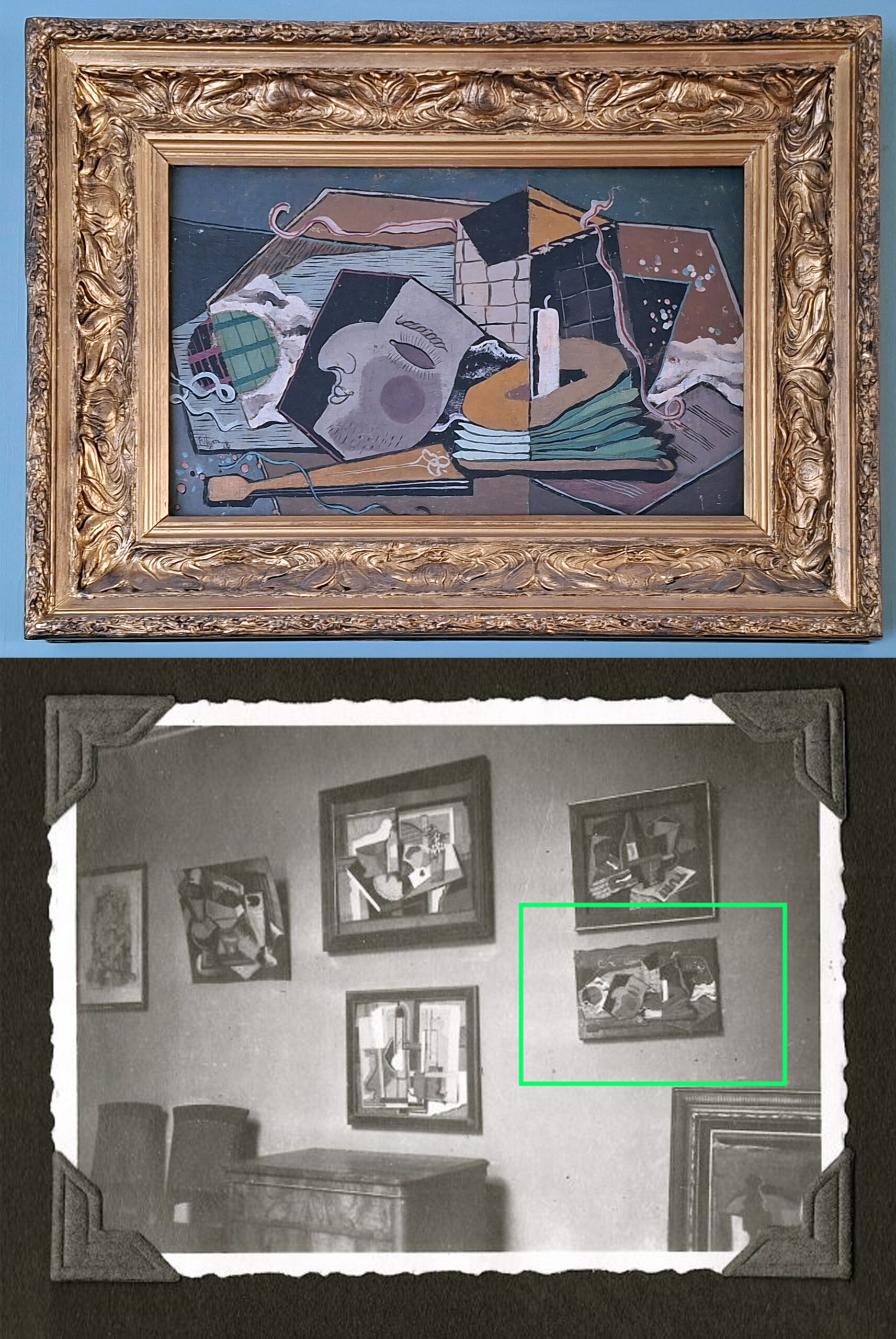
Left: Fritz Wiegmann (1902–1973), Still Life with Mask, 1928, oil on canvas, b+p Collection, Würzburg. Below: The painting in the artist’s apartment, 1928. Does the current form of presentation alter the integrity of the work in comparison to its original context? Have any interventions or changes been made since 1928 that have compromised the integrity of the work? Are the current conservation conditions suitable for ensuring the long-term integrity of the painting, or do they pose risks of substance loss or irreversible changes?
Coherence / Unity: Why Completeness Alone Is Not Sufficient
The concept of integrity is not exhausted by questions of completeness and intactness. A work may appear intact in all individual respects — and yet fail to produce a coherent overall effect. When the material and immaterial dimensions of a work are no longer in a coherent relationship to one another, integrity is impaired, even if no single criterion is obviously violated.
Coherence — understood as cohesion or unity — designates this non-contradictory relationship among the dimensions of the work. It is the quality that makes an experienceable whole out of the sum of its parts. A work whose restored sections are stylistically consistent but tonally slightly shifted; a work that is materially fully preserved but presented in a context that fundamentally distorts its meaning — such works may be compromised in their coherence without any single measurable deficiency being present.
Coherence is thus the most demanding and at the same time the most subtle aspect of integrity. It cannot be worked through as a checklist, but requires an overall perception of the work as a cohesive phenomenon.
Frameworks of Reference
The concept of integrity is not new in the field of cultural heritage protection. The UNESCO Operational Guidelines for the World Heritage Convention (2005, revised 2024) define integrity as a measure of the wholeness and intactness of all characteristic features of cultural heritage. Three guiding questions structure the concept: Are all essential components present? Are there significant impairments? Are the conditions for long-term preservation secured?
The Nara Document on Authenticity (1994) broadens the understanding of cultural identity by emphasizing that the meaning and identity of cultural goods are not conveyed through their materiality alone. Design, function, tradition, and spiritual expression are equally valid bearers of meaning. This expanded understanding is particularly productive for the study of individual works of art: it prevents a purely materially oriented approach and opens the view to the immaterial dimensions that constitute the work as a cultural object.
These concepts were originally developed for monuments and World Heritage sites. Their transfer to the individual work of art requires adaptation — a work is not an ensemble, not a site, but an individual object with a specific artistic authorship. Nevertheless, the fundamental ideas of the UNESCO frameworks provide a sound conceptual basis: wholeness, intactness, and secured preservation as guiding questions, supplemented by the immaterial framework of meaning of the Nara Document.
Conclusion
Integrity is not a synonym for good condition. It denotes a qualitative property of the work of art: the unity of substance, form, content, and context, from which the work is experienceable as a coherent whole.
A work possesses integrity when its parts — the material as well as the immaterial — stand in a coherent relationship to one another and together bear the artistic and historical identity of the work. It loses integrity when this relationship is so disturbed by interventions, losses, overlayings, or changes of context that the work can no longer be experienced as what it is by its very nature.
To assess the integrity of a work of art therefore means to view a work in its totality — not as the sum of measurable individual parameters, but as a living testimony to an artistic act, which is either preserved or impaired in its coherence.
Dr. Martin Pracher, March 2026
Related article =>
WIP Score: Integrity Protocol for Artworks
Paradigm shift: From damage assessment to integrity assessment

