What is the integrity of a work of art?
Definition and an attempt at structuring as an evaluation criterion
In the field of cultural heritage protection, the concept of integrity has been understood since the 1970s as a criterion of “completeness and integrity.” It was defined in detail in the Operational Guidelines of the UNESCO World Heritage Convention (2005, amended in 2024). The understanding of authenticity, on the other hand, was expanded by the Nara Document on Authenticity (1994). There, authenticity is viewed as a multifaceted, culture-dependent concept that can be defined by both tangible and intangible aspects.
Since these two concepts largely pertain to historic buildings and World Heritage sites, it makes sense to examine how these ideas can be applied to individual works of art.
The aim here is to use integrity as a comprehensible and comparative standard for assessing the state of preservation, value, and changes in value.
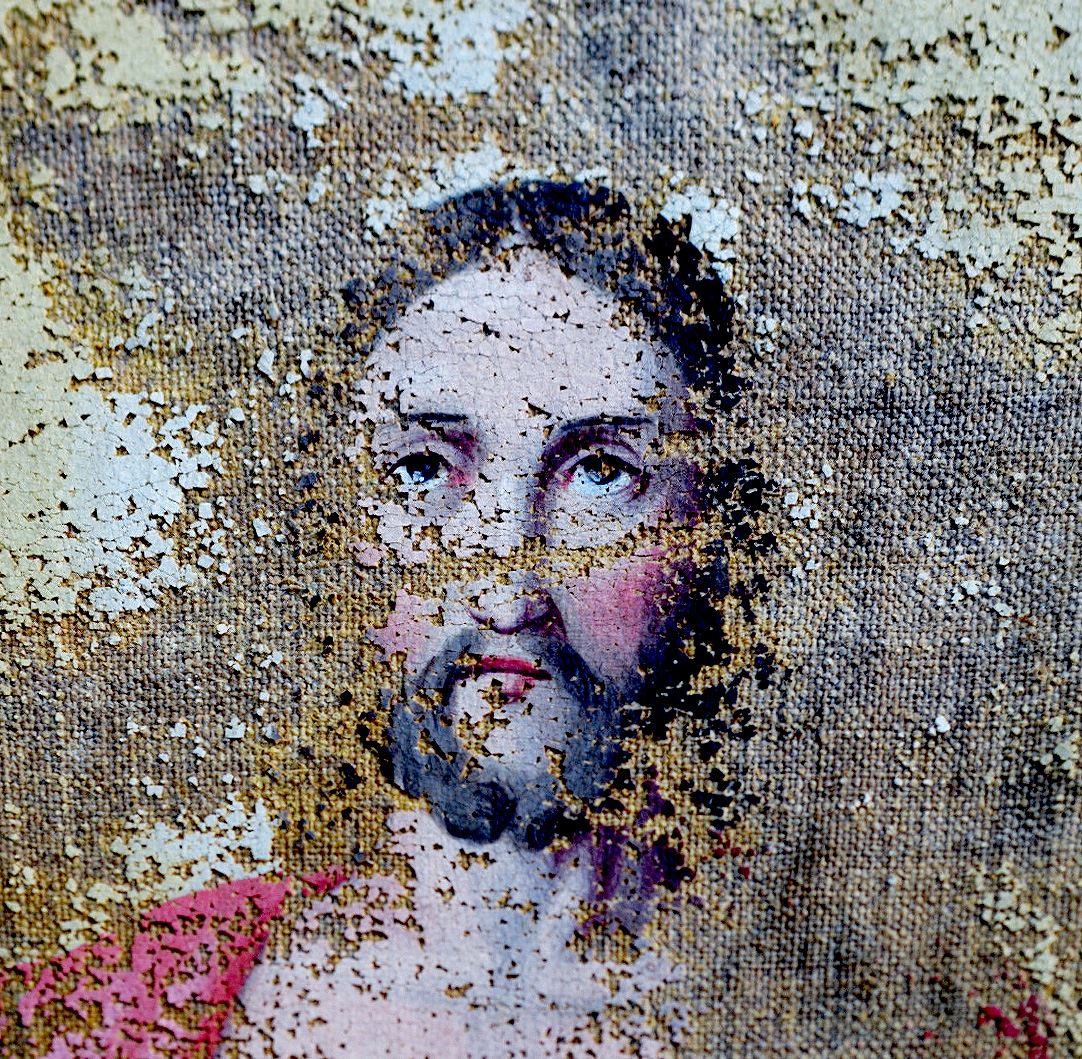
Unknown painter, “Salvator Mundi,” 19th century, oil on canvas. Is the integrity of the authentic painting in terms of completeness/wholeness, intactness, and long-term preservation still verifiable?
Integrity in Cultural Heritage Preservation
The UNESCO Operational Guidelines define the protection status of a cultural heritage site in terms of the completeness and integrity of all its characteristic features.
Three questions are central to this:
- Are all essential components present (completeness)?
- Are there any significant impairments (integrity)?
- Is long-term preservation ensured (protection and context)?
The Nara Document on Authenticity broadens our understanding of authenticity. It emphasizes that materials, design, function, tradition, location, and spiritual expression can all equally serve as vehicles of meaning and identity.
In this sense, integrity and authenticity are not merely a matter of substance, but also of meaning and cultural context.
Transfer to the Individual Artwork
In the case of individual works of art, it is likewise the totality of material and immaterial characteristics that defines a work’s identity and message.
In the context of a work of art, integrity means, for example,
- that all elements defining the work are present,
- that no substantial or creative interventions distort the message,
- and that preservation conditions and context do not permanently impair its perception.
Integrity thus describes the relationship between condition, meaning, and impact.
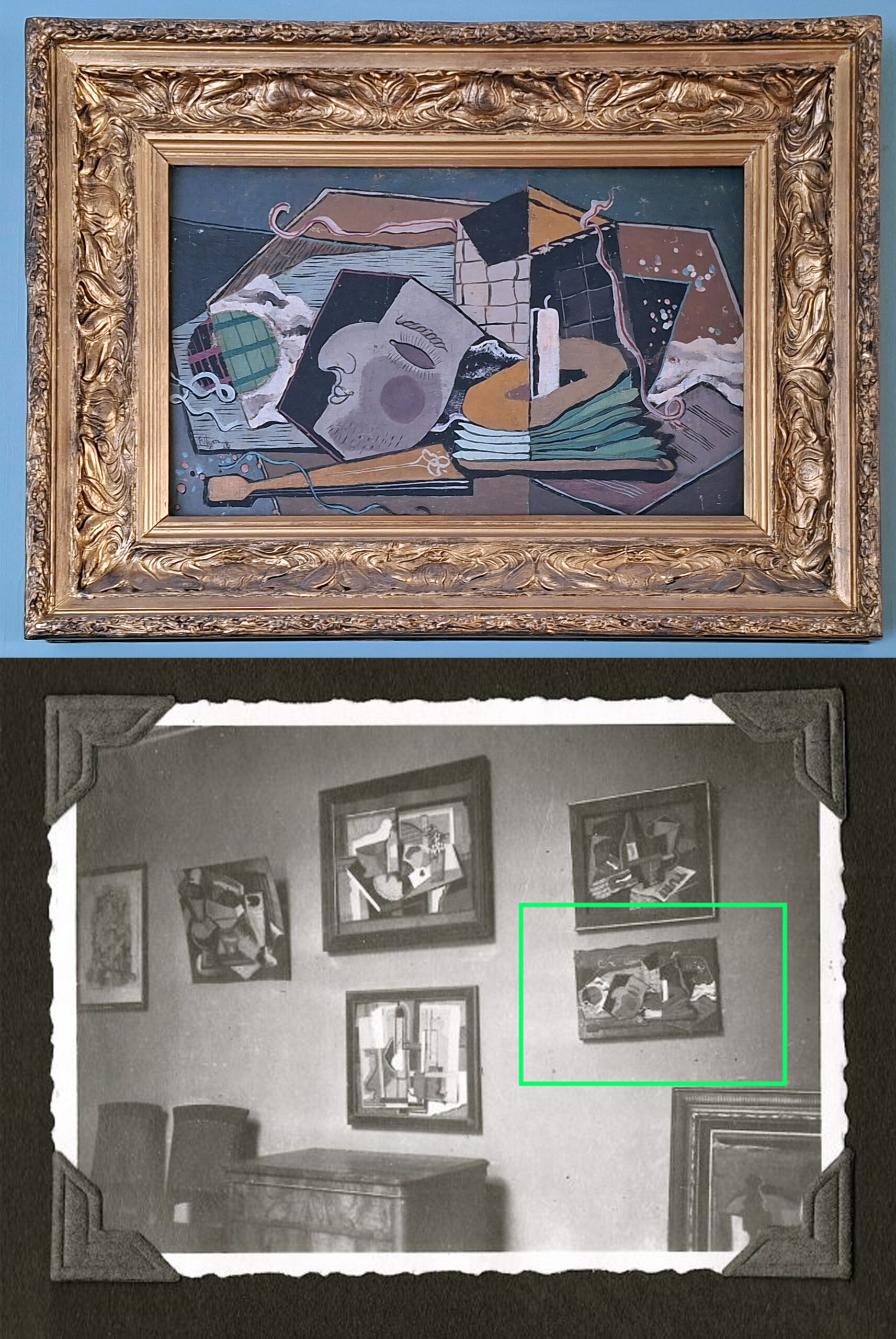
Left: Fritz Wiegmann (1902–1973), Still Life with Mask, 1928, oil on canvas, b+p Collection, Würzburg. Below: The painting in the artist’s apartment, 1928. Does the current form of presentation alter the integrity of the work in comparison to its original context? Have any interventions or changes been made since 1928 that have compromised the integrity of the work? Are the current conservation conditions suitable for ensuring the long-term integrity of the painting, or do they pose risks of substance loss or irreversible changes?
In my view, the key principles of the UNESCO Guidelines and the expanded understanding of authenticity according to Nara can be applied to an individual work of art as follows:
- Integrity is defined by the presence of all material and conceptual components of the work.
- Integrity refers to both the physical substance and the visual and thematic coherence.
- Secure preservation and context correspond to the conditions for conservation, as well as a presentation that does not distort the perception of the work.
Material and immaterial criteria together reflect these three requirements. They complement one another and prevent a purely material-oriented or purely interpretive approach.
Material Criteria of Integrity
The material criteria concern the physical condition of the work. These include in particular:
- original paint layer, colour substance and varnish,
- support (canvas, wood, etc.),
- original framing, if relevant to the work,
- condition without significant overpaintings or material losses,
- documented restoration interventions.
Material criteria refer to the materials that directly convey the artistic design and message.
When applied to the UNESCO Guidelines, these criteria correspond to the aspects of completeness and integrity. If original material is missing or has been significantly altered, the integrity of the site is fundamentally compromised.
Immaterial Criteria of Integrity
In addition to the material dimension, immaterial criteria are crucial. These include:
- artistic intention,
- compositional coherence,
- stylistic unity,
- iconographic expression,
- provenance and historical embedding,
- presentation and perception context.
These factors determine the intellectual and cultural identity of the work. A work of art may be largely preserved physically yet still have its integrity compromised if, for example, its visual message has been altered by extensive reworking or if the current context significantly distorts the intended perception.
The Nara Document’s broader definition of authenticity—that it cannot be reduced solely to materiality—applies here. Design, expression, and cultural significance are equally important factors in determining integrity.
Conclusion
The integrity of a work of art refers to the preserved unity of its material, form, message, and context. It is not an absolute value, but rather the result of a structured analysis.
The UNESCO Operational Guidelines and the Nara Document on Authenticity provide a practical framework for this purpose. The distinction between tangible and intangible criteria allows for a clear description of the characteristics that define the work’s identity.
Integrity thus becomes a verifiable standard of evaluation that meets both art-historical and legal requirements. It provides structure to interpretation without supplanting it, and creates a solid foundation for expert opinions, insurance appraisals, and court decisions.
Dr. Martin Pracher, March 2026
Related article =>
WIP Score: Integrity Protocol for Artworks
Paradigm shift: From damage assessment to integrity assessment

